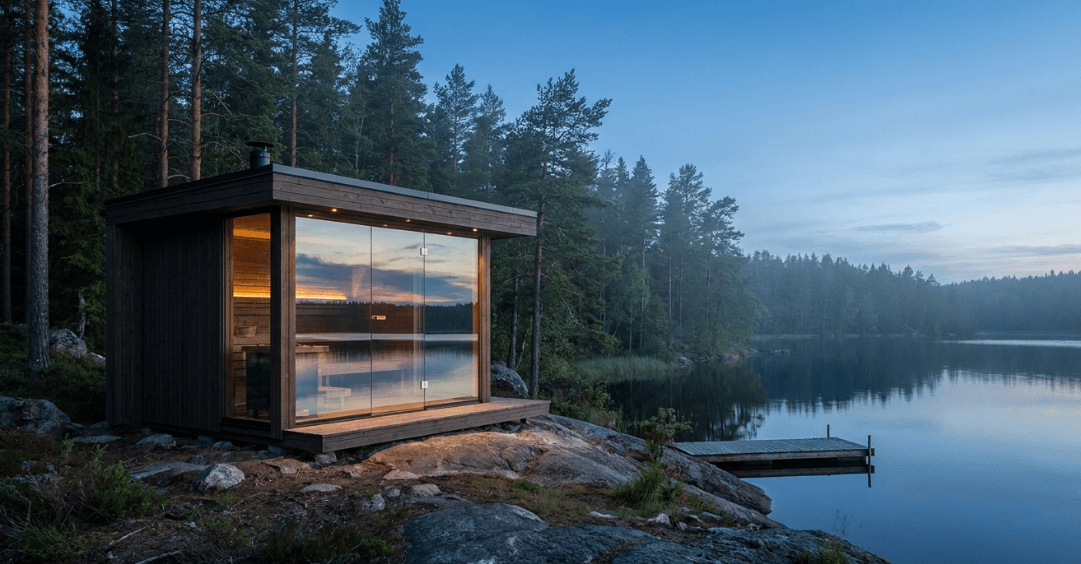
A well-built outdoor sauna, kept up with a handful of routine tasks, should last 15 to 25 years before major components need replacing. The core habits are simple: reseal the exterior wood every one to two years, keep the door and vents open between sessions to let moisture escape, check the heater stones annually, stay ahead of drainage around the base, and give the unit a short winterizing pass before the first hard freeze if the climate calls for it. None of this requires special tools, but skipping it for a season or two is how a good sauna starts looking tired well before its time.
How Often Should the Exterior Wood Be Resealed?
The outside of a cedar or heat-treated cabin sauna takes the weather directly, and a UV-rated exterior oil or sealant is what keeps it from graying and cracking prematurely. Most manufacturers recommend reapplying every one to two years, sooner in climates with intense sun, coastal salt air, or heavy rainfall. The interior wood is a different story and should stay unfinished. Sealing the inside traps moisture in the wood instead of letting it evaporate between sessions, which speeds up warping rather than preventing it.
How Do You Manage Runoff on a Tight Lot?
A sauna roof, whether a simple shed slope on a barrel or a peaked roof on a cabin, sheds a surprising amount of water during a storm, and on a small property that runoff often has nowhere to go but toward a fence, a neighbor’s yard, or the sauna’s own foundation. Grading the pad so it slopes gently away from the structure on all sides is the first fix, and a short run of gravel or a small French drain along the low edge handles the rest when the lot is too tight for broader grading. Gutters are worth adding on a cabin-style unit if the eave overhangs a walkway or sits close to a property line, since a few feet of clearance is often all a small yard allows.
What Does the Heater Need Each Season?
Sauna stones crack from repeated thermal cycling and need replacing roughly every one to three years, depending on how often the sauna runs. Cracked or crumbled stones hold less heat and release it faster, which is often why a well-maintained sauna suddenly seems to take longer to reach temperature. Vacuuming stone dust out of the heater base once or twice a year keeps airflow around the elements clear. Wood-fired stoves need the flue and chimney checked for creosote buildup before each heavy-use season, the same way an indoor wood stove would.
What About Ventilation Beyond the Door?
Most cabin saunas have a dedicated intake vent low near the heater and an exhaust vent higher on the opposite wall, and both need to stay clear of dust, spider webs, and stacked towels for the airflow pattern to work as designed. A blocked vent forces the heater to work harder and lets steam and moisture linger in corners of the room instead of cycling out, which is often the real cause behind a musty smell that owners mistake for a mold problem needing harsher cleaning. A quick check with a flashlight every few months, brushing out any buildup, is usually all the vents need.
How Do You Prevent Mold and Mildew Inside?
Moisture, not heat, is what damages sauna wood over time, and the fix costs nothing: prop the door and any vents open after every session so the interior can dry out completely before the next use. A sauna that gets closed up wet, especially in a humid climate or a shaded corner of a small yard with limited airflow, is the fastest path to mildew on the benches and backrests. Wiping down benches with a soft brush and plain water after use, without soap or chemical cleaners that can leave residue that off-gasses when heated, is enough for routine cleaning.
What Hardware and Seals Need Checking?
Door gaskets and hinges take a lot of thermal cycling and are worth a visual check twice a year, since a gap in the door seal lets heat escape and forces the heater to work harder to hold temperature. On a barrel sauna, check the steel bands or cradle straps that hold the staves under tension, since wood shrinks and swells seasonally and bands can loosen over a year of weather. Buyers shopping for a unit built with maintenance in mind, meaning hardware that is easy to access and replace rather than buried in the frame, can compare current models at SweatDecks.com alongside other specialty outdoor sauna retailers before choosing a build.
How Should a Sauna Be Prepared for Winter?
In climates that see hard freezes, a short seasonal checklist prevents most cold-weather problems. Any water line feeding an outdoor shower, sink, or wash-down hose near the sauna should be shut off and drained before temperatures drop, since a frozen and burst line is a common source of spring repair bills that has nothing to do with the sauna itself. Snow load should be cleared from a flat or low-pitch roof after heavy storms, and the door seal is worth a close look right before the first freeze, since a gasket that was fine in October can shrink and let cold air whistle through by January. Owners in milder climates can usually skip this step and run the sauna year-round without a special routine.
Does Consistent Maintenance Change Whether Use Pays Off?
A sauna that is well maintained gets used more often, and use frequency is the variable that shows up repeatedly in the research on sauna bathing and health. A review in The American Journal of Medicine outlined both the benefits reported in sauna literature and the contraindications worth knowing, including caution for people with unstable cardiovascular conditions. A broader review covering the physiology of heat exposure described cardiovascular and other associations tied specifically to regular, sustained sauna use rather than occasional sessions. A systematic review of clinical studies on dry sauna bathing reported similar associations across the trials it summarized. None of this is a reason to over-clean or over-maintain a sauna, but it is a reasonable case for keeping a unit in good enough condition that it stays part of a routine instead of turning into a yard fixture nobody uses after the first season.
Frequently Asked Questions
How often should an outdoor sauna be resealed? Exterior wood generally needs fresh oil or sealant every one to two years, more often with heavy sun or rain exposure. The interior is left unfinished so it can breathe.
How do I stop water pooling around a small backyard sauna? Grade the pad to shed water away from the structure and add a short gravel drainage strip on the low side if space against a fence or wall is tight.
How long do sauna heater stones last? Typically one to three years depending on use frequency, since repeated heating and cooling cracks them and reduces how much heat they store.
Should I leave the sauna door open between sessions? Yes. Propping the door and vents open lets residual moisture escape instead of sitting in the wood, which helps prevent mold.
Does an outdoor sauna need winterizing in cold climates? Yes. Draining any nearby water lines, clearing snow off the roof, and checking the door seal before the first hard freeze prevents most cold-weather damage.
References
- Benefits and risks of sauna bathing, The American Journal of Medicine, 2001
- Effects of heat and cold on health, with special reference to Finnish sauna bathing, American Journal of Physiology – Regulatory, Integrative and Comparative Physiology, 2018
- Clinical Effects of Regular Dry Sauna Bathing: A Systematic Review, Evidence-Based Complementary and Alternative Medicine, 2018