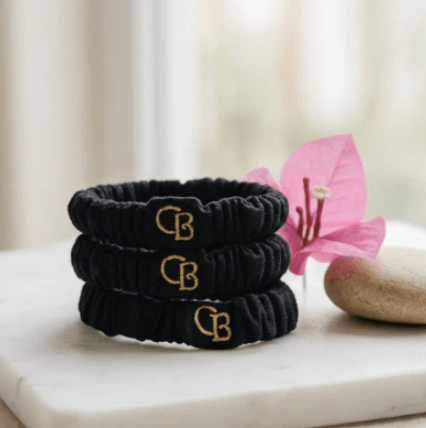
Hand the same hair tie to three different people and you will get three different verdicts. One says it slips out by lunch. Another went through two of them in a month. The third can’t brush out the dent it leaves. Same tie, same materials, three complaints, because the hair underneath it was doing three different jobs.
Matching a hair tie to your hair type, an angle Ciao Bella and a few similar makers have started to take seriously, begins with a simple admission. The phrase “works for all hair types” sits on almost every package, and it is almost never the whole truth. A tie that suits fine hair can be useless on thick hair, and the reverse holds just as often. Knowing how your own hair fails a tie is the fastest way to pick one that lasts.
Why One Tie Rarely Suits Every Head
Every hair tie does two things at once. It grips, and it holds tension. The trouble is that grip and tension trade off against each other. A tie that does not grip well has to be cinched tighter to stay put, and a tie cinched tight puts more strain on the hair and on itself. Most ponytail damage traces back to that single trade. Your hair type decides which side of it goes wrong first. Fine hair tends to slip, so it gets overtightened. Thick hair overloads the tie, so the tie gives out. Curly hair marks easily, so it shows the dent. The fix has less to do with your hair than with the tie. What helps is one whose grip comes from its surface rather than from sheer pressure, so you stop choosing between a ponytail that falls and one that pulls.
See also: Service Robots in Daily Life
Fine Hair and the Slipping Problem
Fine, smooth strands are slippery, and a glossy synthetic tie is slippery too. Put the two together and the ponytail slides down within an hour. The usual response is to wrap the tie one more time and pull it a notch tighter, which is exactly the wrong move for hair this delicate. Fine hair breaks at lower tension than thick hair does, so the extra cinch you add to stop the slipping is the same force that snaps strands at the base. What fine hair needs is a tie that holds with texture instead of force.
Thick Hair and the Tension Problem
Thick and coarse hair has the opposite complaint. The hair holds the tie in place easily, so slipping is rarely the issue. Volume is. A thin elastic stretched all the way around a heavy ponytail is working at the very edge of what it can do, and it shows. The center loses its snap fast and the sleeve frays within weeks, and when it finally gives, it tends to take a few strands with it. Thick hair also produces the deepest dents, because the tie has to clamp hard just to stay closed. A tie built for this needs a wider band that spreads its hold over more surface instead of biting into one line, plus a center with enough real stretch that a big ponytail does not push it past its limit. Durability stops being an environmental talking point here and becomes a daily one, since thick-haired people burn through cheap ties faster than anyone.
Curly and Coily Hair and the Dent Problem
Curly and coily hair brings a different worry to the front. Curls are fragile at any point of friction, and the curly-hair community has spent years learning to avoid anything that snags or leaves a crease that breaks the pattern. A tight synthetic tie does both. It also tends to be tied on damp hair, since many people style their curls wet, and a slick elastic slides on a wet curl even worse than on a dry one.
What to Actually Look For
Once you know your own failure mode, the shopping gets simpler. If your hair slips, look for surface texture over a tight, glossy finish, and judge a tie by how few wraps it needs rather than how hard you can pull it. Thick hair is more about the build, so check the width of the band and ask what the center is made of, since a thin synthetic core is the first thing to quit on a heavy ponytail. With curls, the real test is how the tie behaves on damp hair and whether it leaves a mark when you take it out. A tie that claims to suit every hair type might be telling the truth, but only when the grip-without-tension mechanism behind it actually works. Ask how it grips. That one question sorts the honest answers from the slogans.
None of this turns hair type into destiny. A person with fine hair can use a tie built for thick hair and the other way around, and plenty of people get by with whatever is on the wrist. The point is narrower and more useful than a perfect match. When you know how your hair tends to fail a tie, you can read past the packaging and pick for the thing that actually goes wrong, which beats trusting the word “universal” printed on the front.