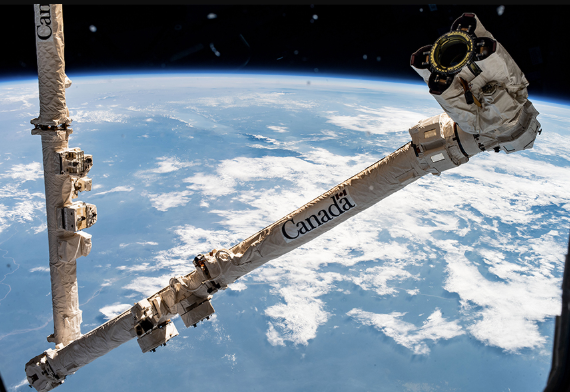
Robotics has become a crucial component in the realm of space exploration. These advanced systems operate in extreme conditions, executing tasks that would be perilous for humans. The development of autonomous navigation and robotic manipulation has enhanced mission capabilities significantly. However, several challenges persist, including the need for improved reliability and adaptability. Understanding these complexities is essential for advancing future missions and unlocking new frontiers in our quest to explore the universe.
The Evolution of Space Robotics
The evolution of space robotics has been marked by significant advancements that have transformed the capabilities and roles of robotic systems in extraterrestrial exploration.
Key developments include enhanced robotic arms designed for precision tasks and sophisticated autonomous navigation systems that enable robots to traverse complex terrains.
These innovations facilitate increased operational efficiency, allowing for extensive scientific research and exploration beyond Earth’s boundaries while minimizing human risk.
Key Technologies Driving Robotic Exploration
Advancements in key technologies are revolutionizing robotic exploration, enabling unprecedented capabilities for missions beyond Earth.
Autonomous navigation systems enhance the ability of robots to traverse complex terrains, allowing for greater operational autonomy.
Meanwhile, sophisticated robotic arms facilitate intricate tasks such as sample collection and manipulation.
These technologies collectively expand the potential for in-depth scientific research and exploration in distant celestial environments.
See also: Robotics in Healthcare
Challenges Faced by Space Robotics
While advancements in technologies have significantly enhanced robotic exploration capabilities, various challenges persist in the realm of space robotics.
Robotic autonomy remains limited by unpredictable environmental hazards, such as radiation, extreme temperatures, and micrometeoroids. These factors necessitate robust design and adaptive algorithms to ensure operational reliability.
Addressing these challenges is critical for maximizing the effectiveness and safety of robotic missions in extraterrestrial environments.
The Future of Robotics in Space Missions
Innovative approaches in robotics are poised to redefine the landscape of space missions in the coming decades.
Enhanced autonomous navigation systems will enable spacecraft to traverse complex environments with minimal human intervention.
Concurrently, advancements in robotic repairs will allow for on-site maintenance of equipment, thus extending mission lifespans.
These developments promise to enhance operational efficiency and reduce risks, fostering greater exploration freedom in outer space.
Conclusion
In summary, the ascent of robotics in space exploration heralds a new era of cosmic inquiry, where human presence is delicately supplemented by autonomous systems. As these sophisticated machines gracefully navigate the vast unknown, they not only extend our reach but also safeguard humanity from the perils of the void. The horizon of discovery expands, inviting us to ponder the profound mysteries of existence, while our robotic emissaries continue to illuminate the path to knowledge beyond our earthly confines.